

Latex and Light
Production designer-turned-furniture designer Jabez Bartlett on materials, light, and learning through experimentation.

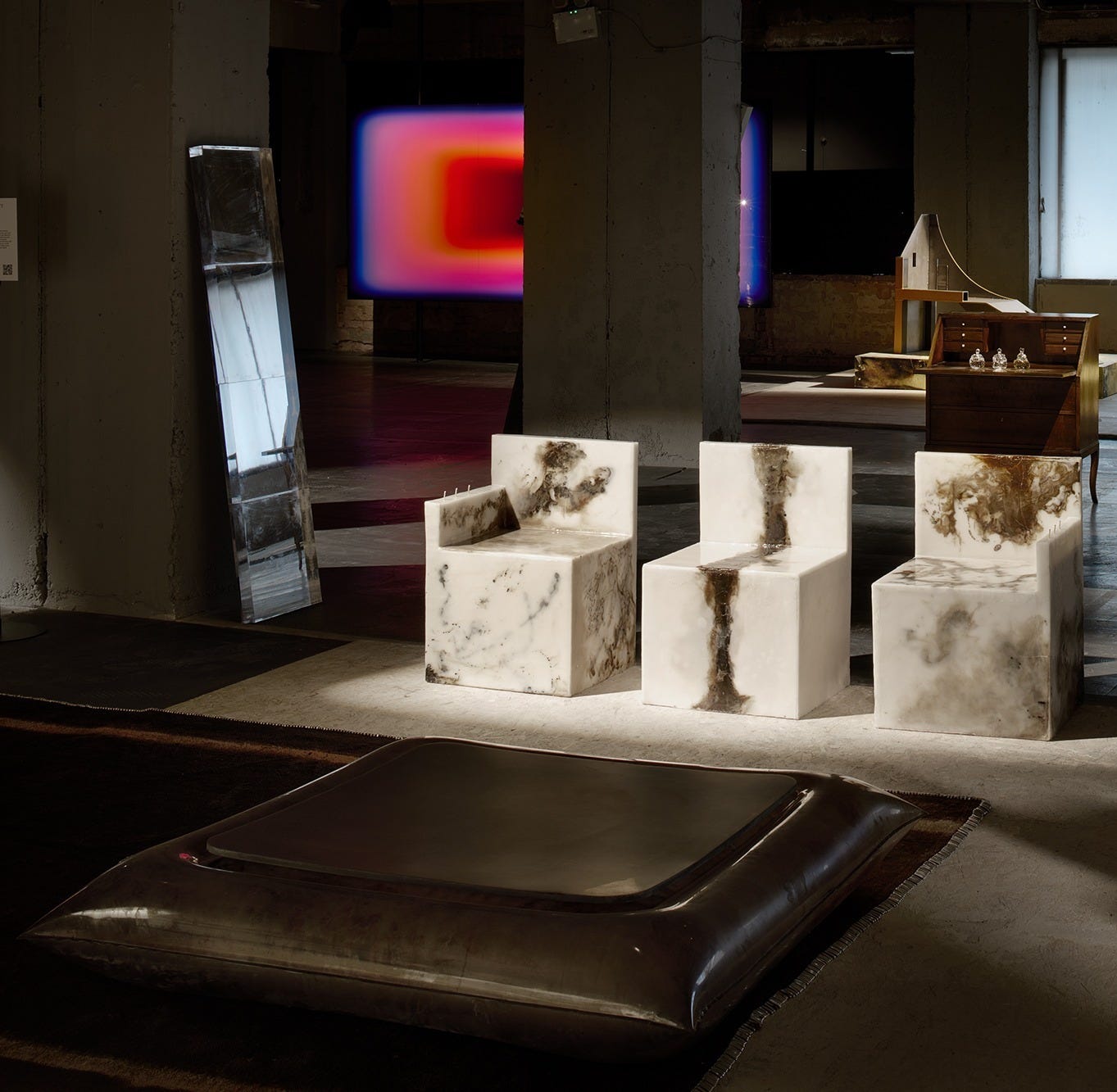
Jabez Bartlett has translated other people’s ideas into physical worlds for more than a decade, designing sets for everyone from Hermès, Chanel and Phoebe Philo to Robyn, FKA twigs and Sampha. His first furniture collection, presented at this year’s Milan Design Week, started somewhere quieter: a mirror, a table, a lamp, formed through material exploration.
Nothing was sketched first. Latex, resin, and mirrored glass become the starting point for months of testing before a piece takes shape. The result is furniture that embraces experimentation, where compromise and unexpected discoveries are as important as the finished object.
We sat down with Jabez at his London home to talk about his transition into furniture, the materials that guide his process, and what gives an object lasting value.
What made you want to make something that was actually yours?
It was actually a book. Three or four years ago I read The Crow Poems by Ted Hughes, and it completely changed the way I thought about making things.
For ten years I’d worked in production design, where everything begins with a client, a script, or a brief. Reading those poems made me realize that some ideas only exist in their own medium. You couldn’t turn them into a painting or a film. They belonged entirely to poetry.
That made me ask myself a different question: If I could make anything, what would I make? I wasn’t responding to anyone else’s project anymore. I was trying to find ideas that belonged to me.
What does taste mean to you?
Taste is incredibly personal. If you trust someone’s taste, it’s because there’s something about the way they see the world that overlaps with your own.
For me, it always comes back to materials and the way they interact with light. Whether it’s furniture, interiors, or a set, the raw quality of a material matters. Then it’s about whether an object carries some kind of narrative. I don’t think objects need to explain themselves, but I do think they should feel like they have a story.
Why does material always come first?
Everything starts with the material.
Originally we wanted to make a cast plaster table, but it didn’t work. That failure led us to latex, and then we spent months pushing it as far as we could - casting it, dyeing it, painting it, stretching it, using natural latex and synthetic latex, trying every possible technique.
Ironically, after all of that experimentation, we ended up using it straight off the roll. Without all those failed attempts, we never would have arrived there.
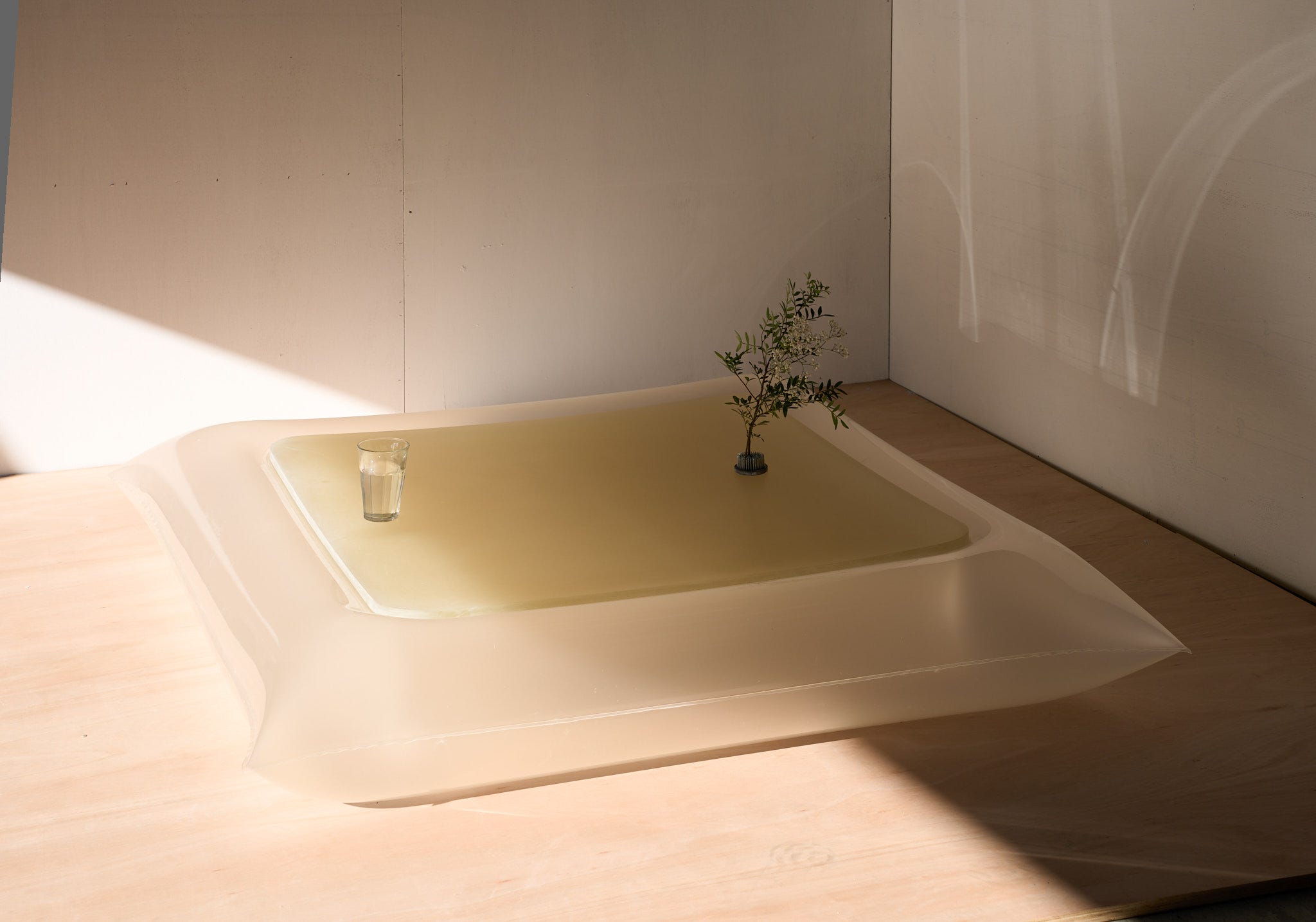
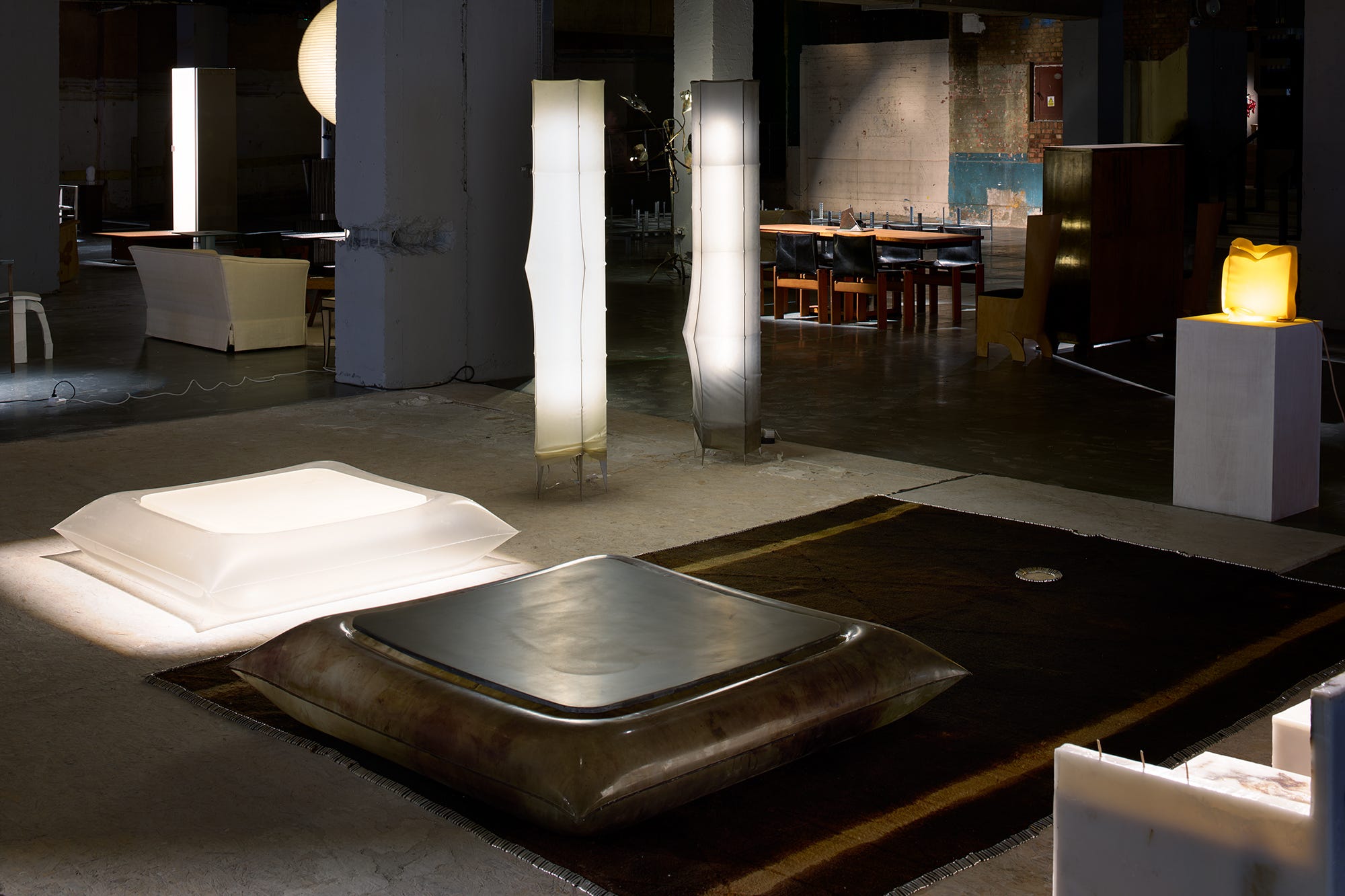
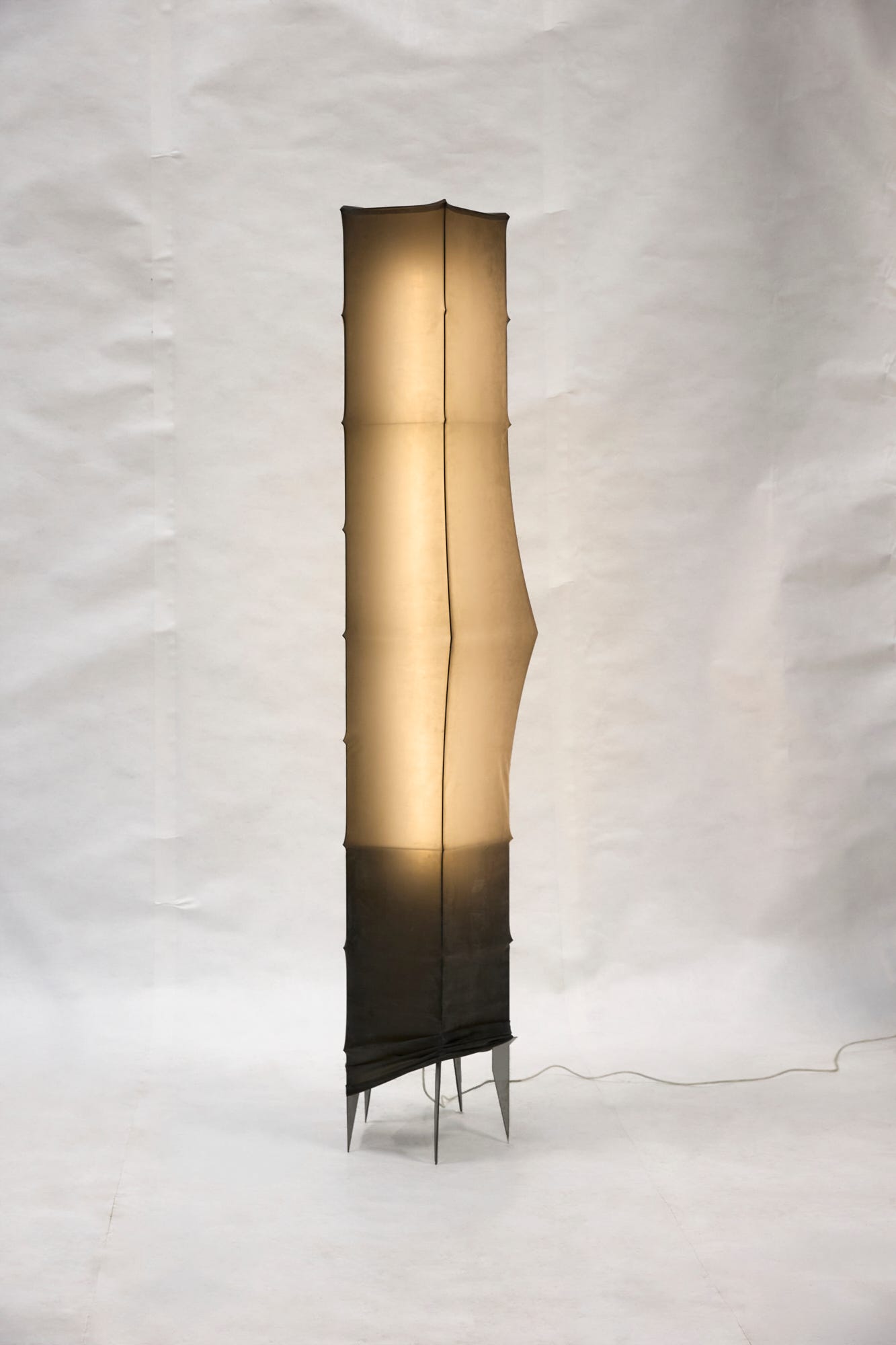
The first three pieces we made: the mirror, the table, and the latex lamp, all use translucent materials. There’s just something about them that resonates with me. I could sit and look at those materials for hours.
Once you recognize that something consistently gives you that feeling, you realize you’re probably meant to keep working with it. That’s when it becomes personal.
How do you think about luxury now?
Working in fashion changed the way I think about luxury. To me, luxury isn’t perfection. It’s the opposite. When something feels too polished, it almost stops feeling luxurious. I want to feel the hand that made it. I want to see the craft behind it, even if the object itself is refined.
That’s why imperfection matters so much. Light reveals imperfect paint, handprints, the age of a surface. Those traces remind you that something was actually built - that people were there.
With CGI, AI, or anything that’s completely polished, you lose that feeling. The imperfections are what make something feel real. Patina isn’t exclusive to leather. Every material develops one. Floors, walls, cutlery, wool - everything records the people who have lived with it.
To me, that’s luxury.
What makes something worth keeping?
Good materials and craftsmanship.
There are always moments when something becomes overused, but those things eventually come back. If you’re wondering what will stand the test of time, the best place to look is what already has.
Mass-produced objects will always feel temporary to me. Handcrafted objects continue to accumulate meaning.
Where does a piece actually start for you?
Usually they begin with an idea that feels slightly impossible. We’ll ask ourselves, What if we tried this? Then we experiment.
Recently we wanted to make a chair out of solid crude-oil wax. We ordered a small amount, experimented with it, then eventually made a full-scale chair. It looked incredible, but structurally it wasn’t really a chair. Still, by the time we made a second version, we understood the material completely.
The mirror was similar. I wanted it to be a single block of mirrored glass that behaved like a prism. We spent almost two years trying different techniques before accepting that we had to compromise the original idea.
Ironically, those compromises made the piece stronger. It became more handmade. Less perfect.
How much of your process is planned, and how much is discovered along the way?
It’s almost always discovered.
When I first started making furniture, I imagined I’d become one of those designers who sits quietly in a studio, draws everything perfectly, sends it away, and gets it made.
It turns out that’s just not how I work. The process is still chaotic, just like production design. We discover ideas through making them.
I also try not to look at other furniture. I’ll research something to make sure it hasn’t already been done, but I don’t want the design itself coming from another object. The mirror began with wanting light to become part of the object, and the table began with the relationship between weight and an inflatable form.
The material always tells me where to go next.
How has your training shaped what you’re making now?
Before fashion, I worked in film. I started as a labourer, became a carpenter, learned scenic painting, prop making, metalwork - anything I could.
Production design taught me that the craft isn’t really about building sets. It’s about creating environments that reveal character through materials, light, and narrative.
That way of thinking never left. Understanding how materials behave obviously helps when making furniture, but more importantly, I hope every piece carries a story.
The biggest difference is the pace.
In production design you receive a brief, build the work, see it lit on set, and immediately know whether it succeeded.
Furniture is slower. You spend years experimenting, often in private, before anyone sees the work.
I think that’s what I enjoy most about it.
Watch the full TASTE episode with Jabez Bartlett on Youtube. Shop his debut collection now on Basic.Space.