

Form First
Berlin-based, Ukrainian artist Illya Goldman Gubin on working with your whole body, owning nothing, and what overlooked materials can become.

Basic.Space is a curated IRL-to-URL shopping experience for what’s new and next in design, art, and fashion. Own The Future™ is where we go deeper - the why - behind the scenes thinking, inspiration, and motivation for how and what we do.
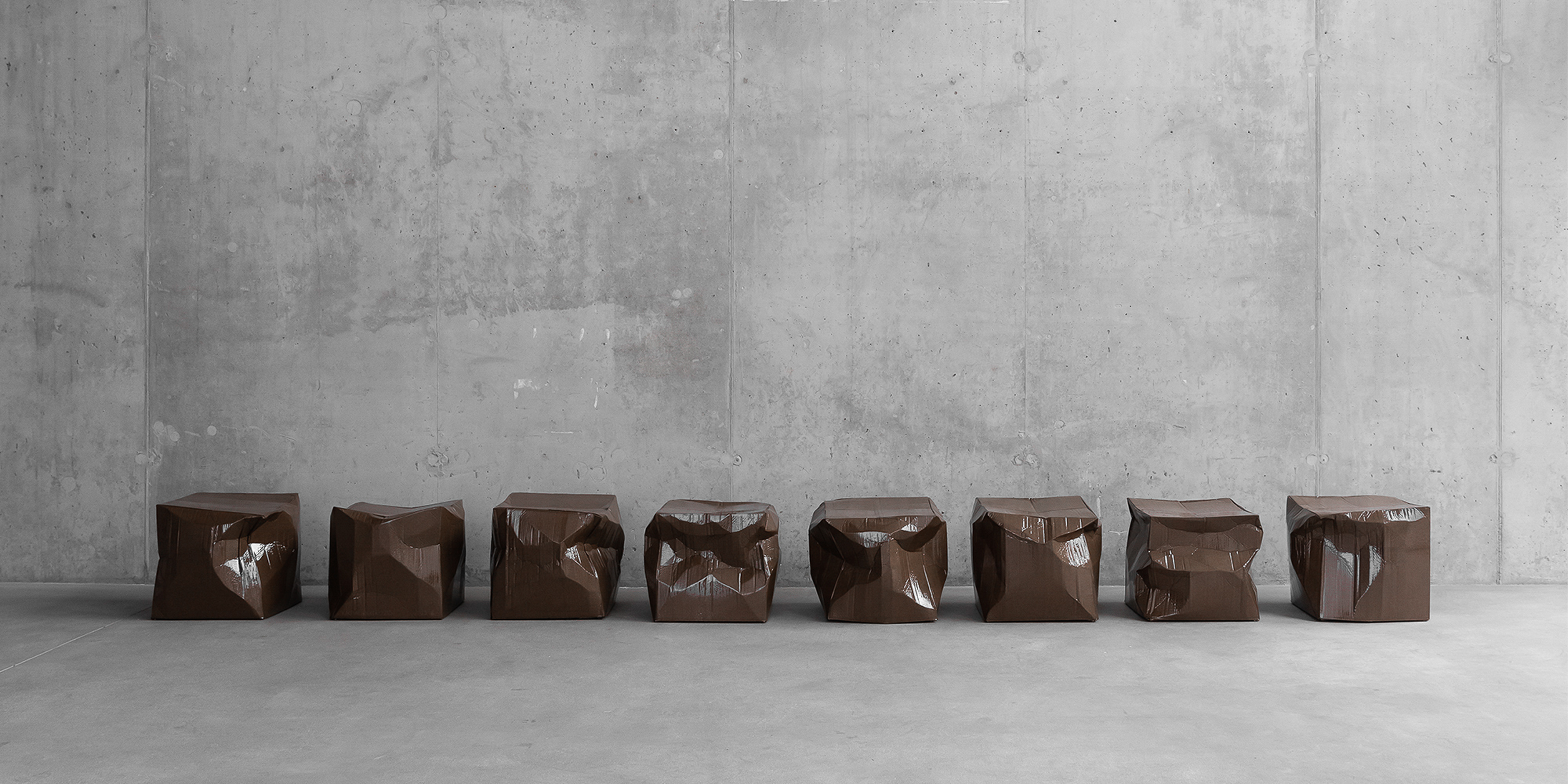
Illya Goldman Gubin sculpts the overlooked into something you can sit on, something you can keep. The Berlin-based Ukrainian artist works across installation, sculpture, and furniture with a quiet specificity - taking materials of transit and utility and asking what else they could be. A crushed cardboard box, a dark-textured shoe, a raw foam arrangement - familiar on the surface, but look closer and something shifts. Through his Berlin studio IGG Atelier, his work blurs function, material, and intent without resolving any of them, a quality that has drawn collaborators like ECCO and Rimowa, and collectors like Demna, who keeps Gubin's pieces in his private collection. He embraces imperfection as a philosophy, the scalability of materials as a question. Each piece invites you to look closer, to touch it, and ultimately, to question it.
We got to chat with Illya at his studio outside of Berlin ahead of his exhibit at Basic.Space London.
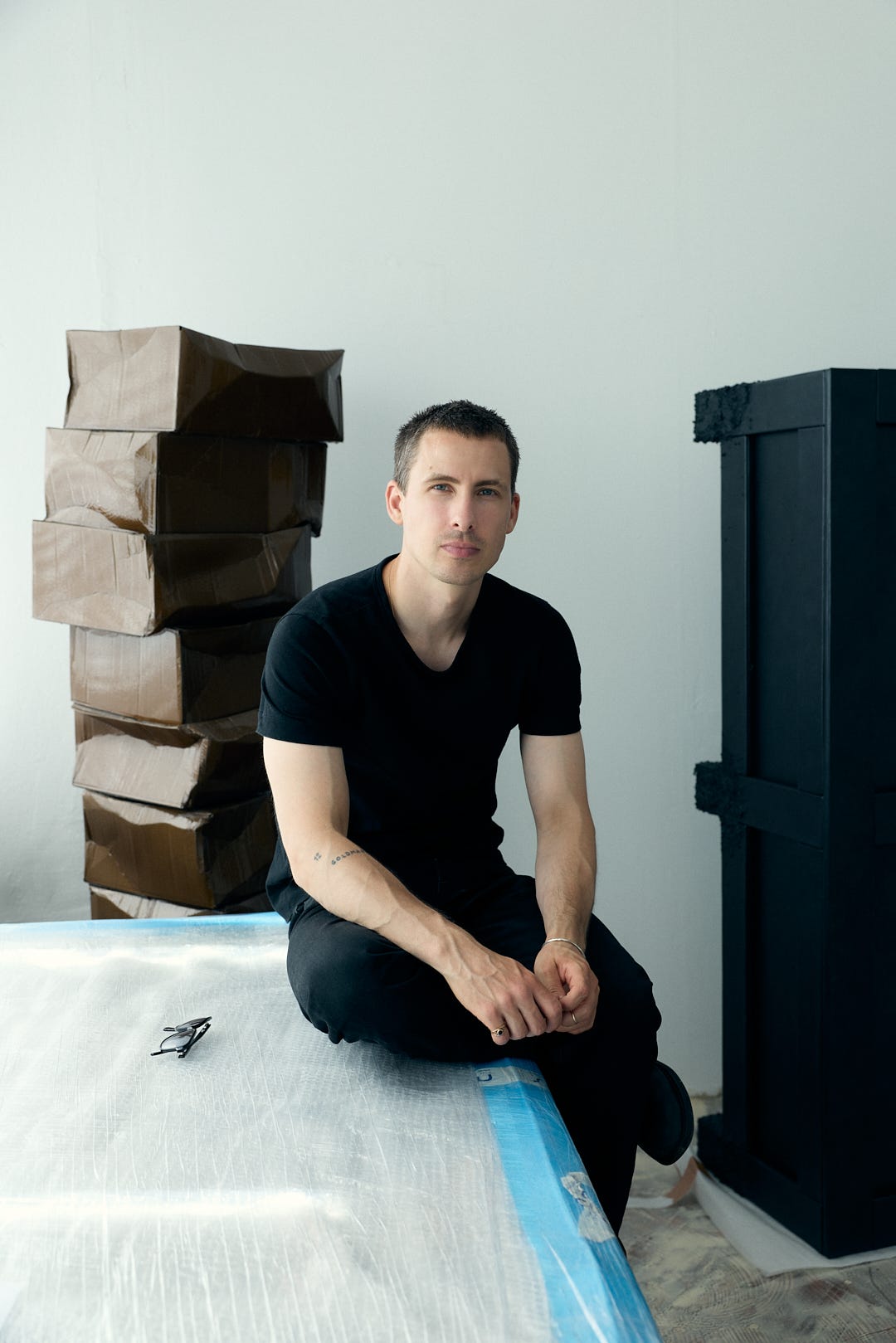
What does taste mean to you?
Taste is a sum of one’s filtered perceptions - an accumulation of what you observe, and what your brain decides to keep. There’s a famous saying, “one only sees what one already knows,” which is beautiful. The more you know, the more you see.
What’s worth keeping and what’s worth letting go?
Since 2022, I got into this space where I try to detach myself from things. My goal became to own less and less. It becomes a burden to own too much. The less I own, the better.
What is something you want to own next?
Without sounding cliché - more time.
What’s the object that made you fall in love with design?
The narratives in the art world made me fall in love with the creative industry. Not the object itself, but the story - why this object is allowed to exist in the world. The idea is more important than the execution. The narrative behind what I create is more important than the piece.
What was the last thing you made that surprised you?
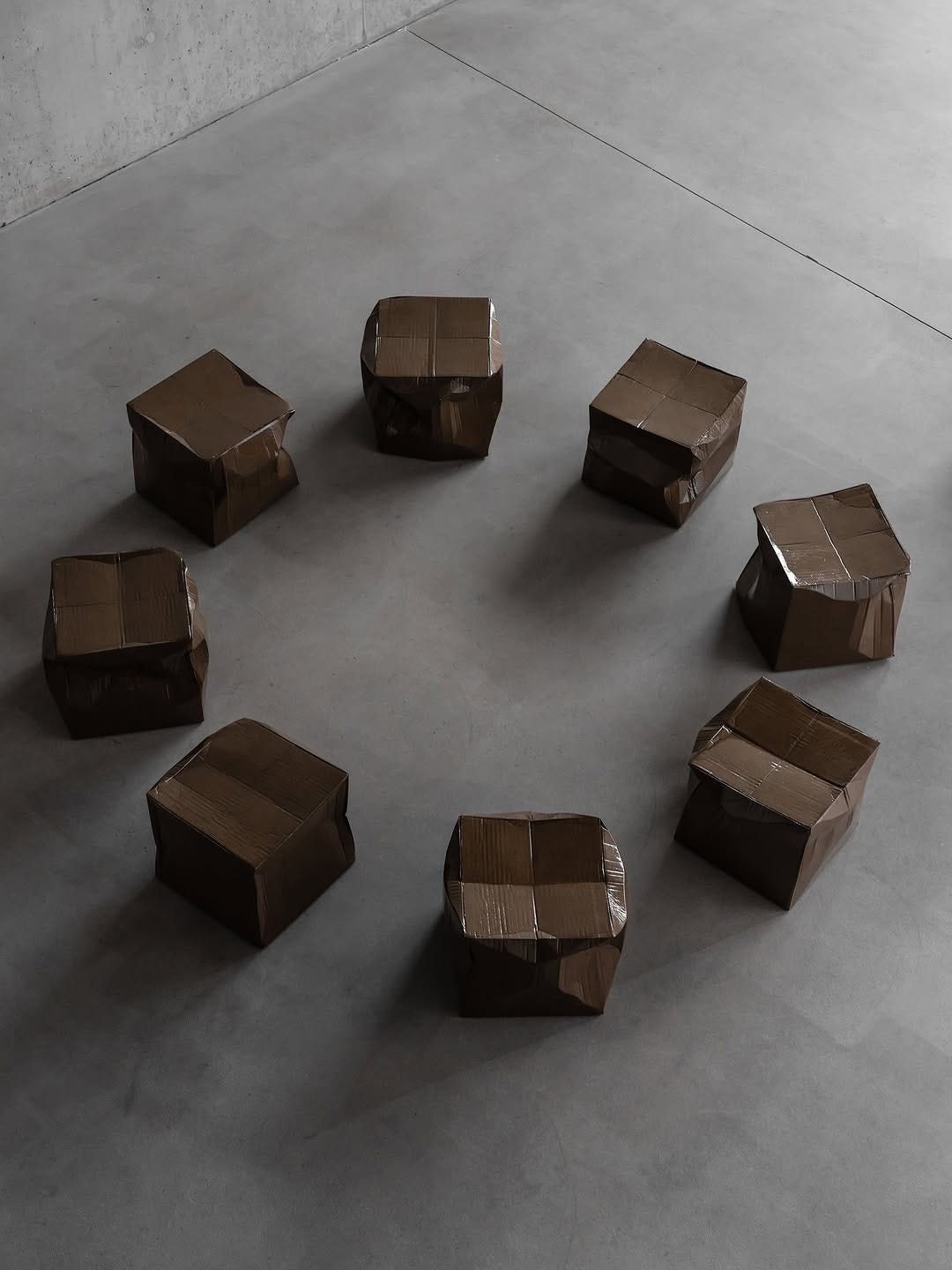
My last show in Seoul. The space had two concrete walls in the middle of the room - one damaged at the base, one intact. I hadn’t researched the space beforehand. But I’d made a cardboard bench in a semi-transparent white finish, deformed on one side and kept fully normal on the other. Only once I was in the space did I realize how precisely the piece echoed those walls - the damaged side mirroring the damaged wall, the clean side mirroring the fresh one. Those alignments are very exciting.


What’s the most underrated part of your process that no one sees?
My work is very performative. The way I deform my cardboard pieces involves my full body - I lay on the box, I hack it, I sit on it. It gets very physical. That part I never show.
How do you know when something is finished?
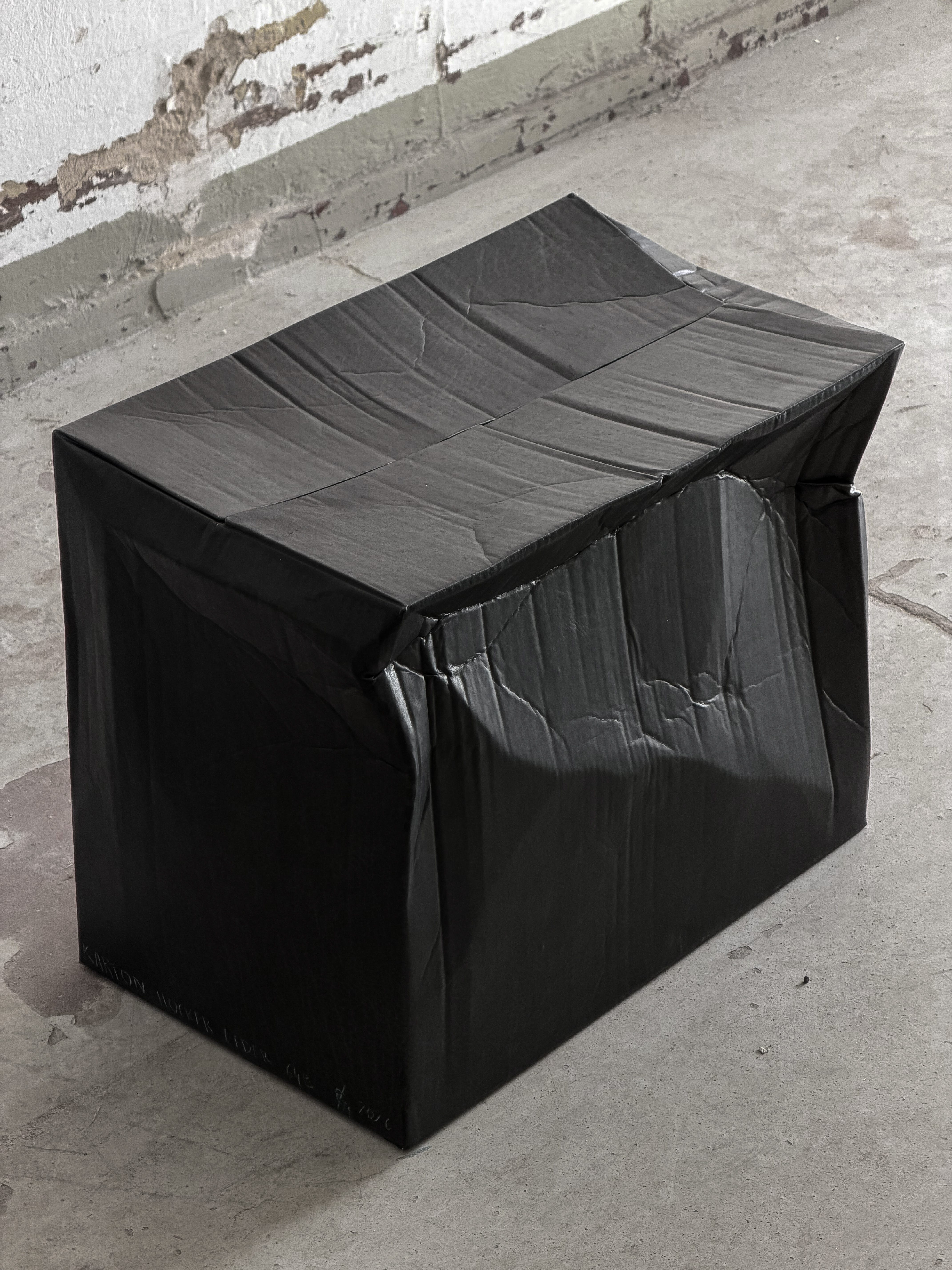
My pieces should never be finished. I enjoy the imperfection in my work. I work very precisely, but at some point there are so many chances that you just decide to keep - and that’s what makes each piece unique.
What are some pieces here you love and why?
Right now I’m very engaged with this new execution of the cardboard stool. My question at the moment is: how can I change the color of the box without changing the actual color of the box? We use cardboard to transport and protect things - art, furniture, whatever. I use it constantly, so I wanted to integrate that material directly into the work. Change the color without changing it. There’s an actual idea behind it.
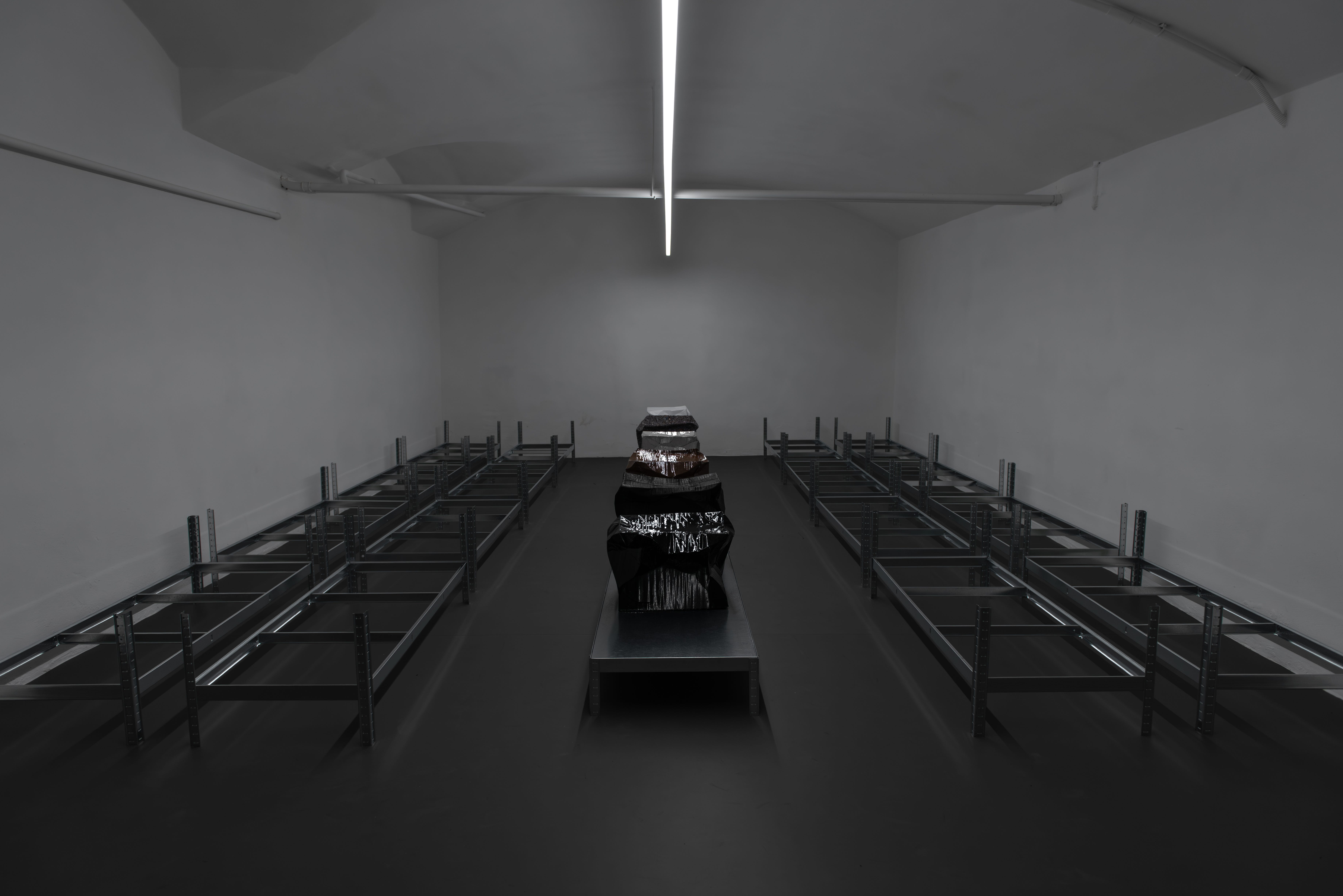
The shelving pieces are also something I’m drawn to. They’re standard galvanized shelf units, but what happens to them is completely unintentional - when zinc comes into contact with water, or water sits in a place without enough airflow for a long time, a chemical reaction occurs. That result belongs to no one.
Walk me through how something actually gets made - where does it start for you?
What a lot of people don’t know is that the form exists first. Once that’s complete, I go through the process of finalizing it so it also becomes functional.
Watch the full Taste episode on Illya Goldman Gubin on Youtube.
Thanks for reading Own The Future™
💡