

Fire and Blossom
Chef and creative director Imogen Kwok on sugar, restraint, and gatekeeping.

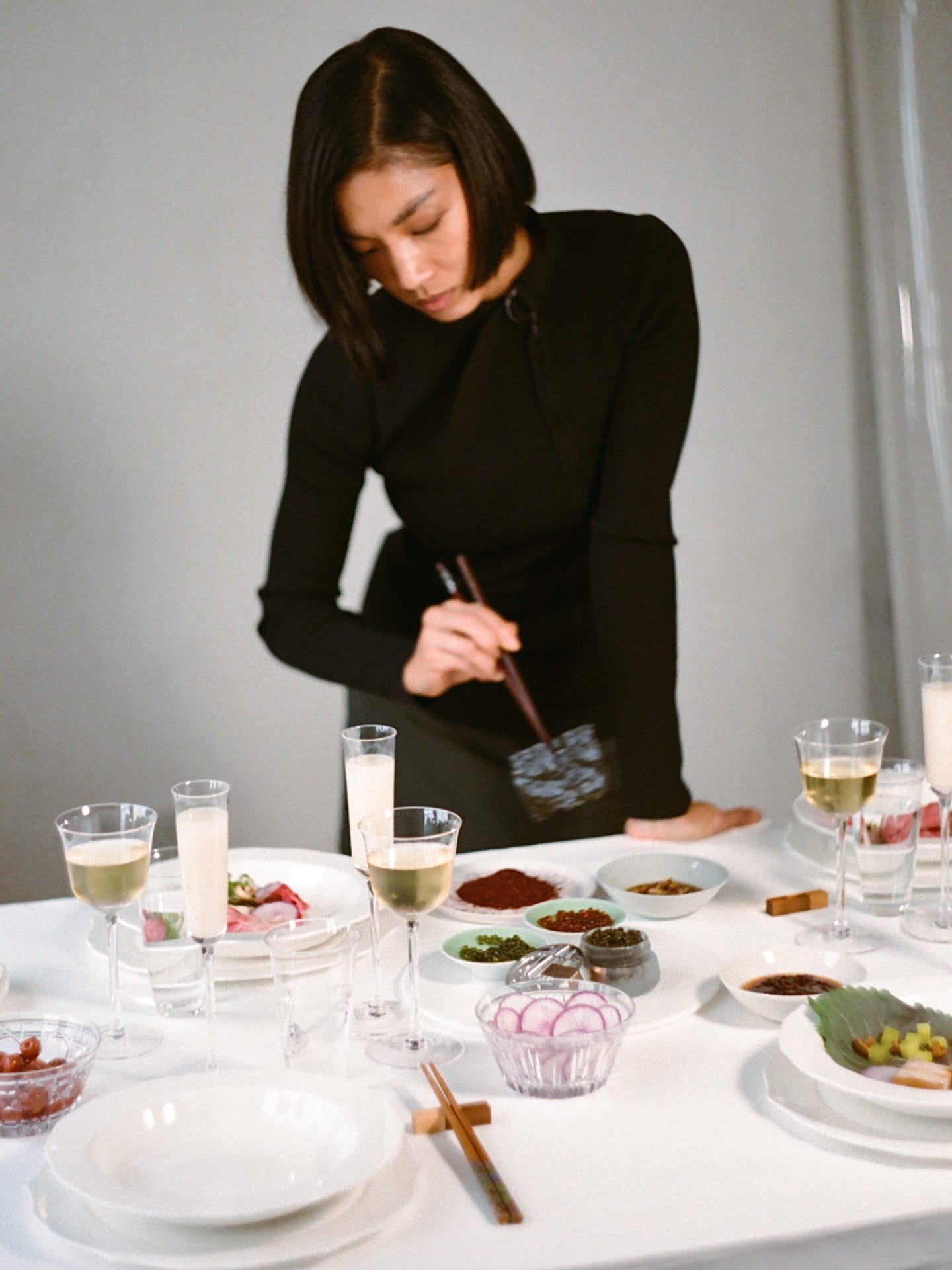
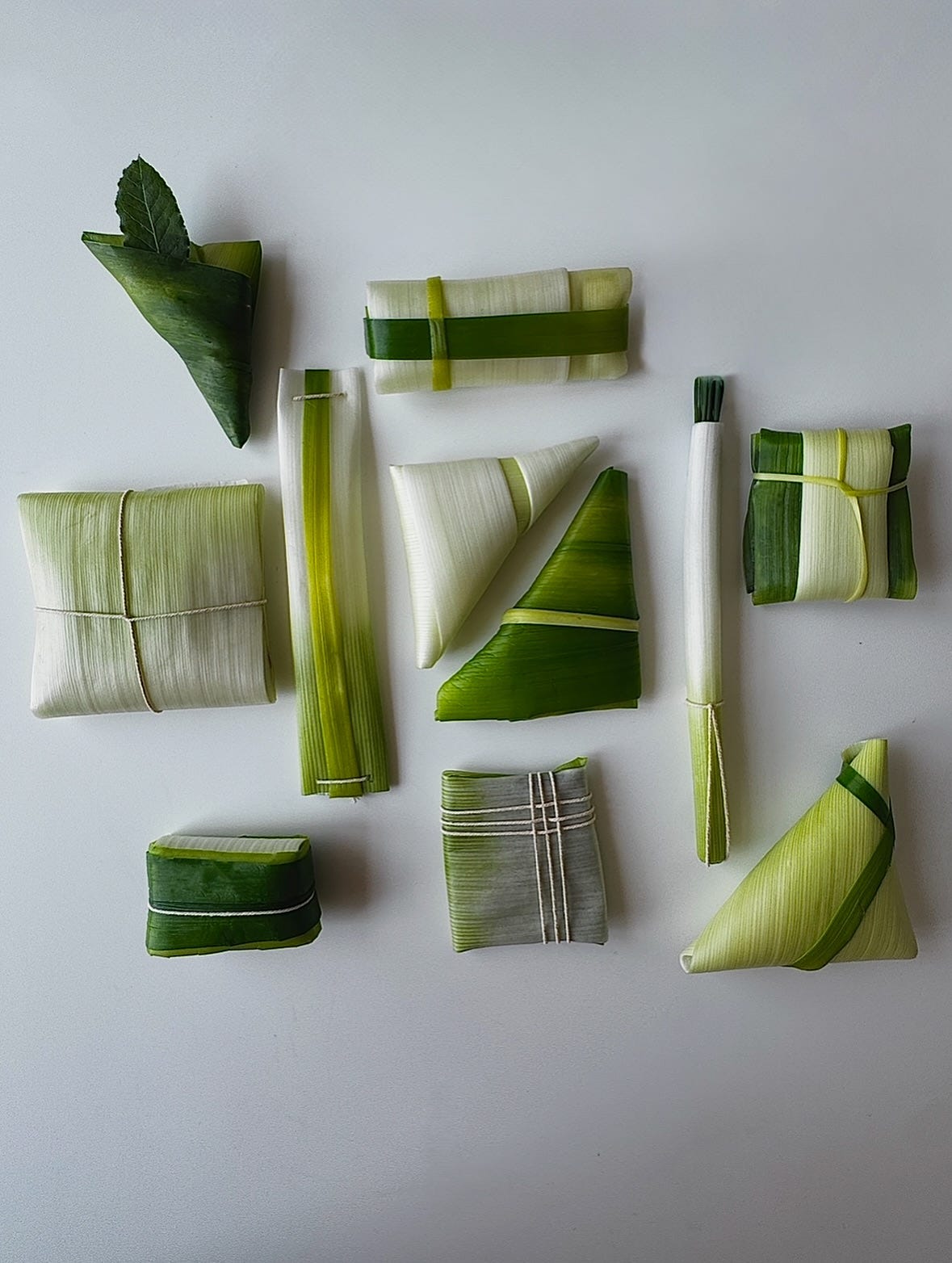
The only way to fully experience what Imogen Kwok makes is to destroy it. Born in Sydney, raised in New York and now based in London, the Michelin-trained chef and creative director works internationally across fashion and fine art. She treats food with the same rigor you’d bring to metal, glass or fabric - building from layered textures and precise geometric arrangements, creating a meal less like a menu and more like a sculpture. But unlike most materials a designer might shape, this medium never really holds still: it melts, bruises and starts to fall apart the moment you touch it. Imogen’s work lives inside that tension, chasing a deliberate, composed moment before everything shifts.
That same instinct runs through how she works more broadly - pare things back, trust the ingredient, leave room for what can’t be controlled. She’s more drawn to restraint than spectacle, and she’d rather keep a little mystery in her process than explain every step of it.
We sat down with Imogen at her London home to talk about taste, luxury, and why she thinks food only really means something once it’s gone.
What is taste, and what does it mean to you?
Taste is intuition. It’s not just about choosing what you wear or work with - it’s how something makes you feel. It’s all-encompassing.
What makes something timeless?
When it’s in its purest form - permanently useful, permanently functional. It’s a balance between making sense and finding beauty in simplicity. I learned a lot about that through cooking: there are certain things you always return to, things that hold everything together no matter the era. That’s fed into my own work.
When did you first realize that you had taste?
I think that ties into timelessness. When you’re young - cooking, or playing violin like I did growing up - you want to show off every technique you know. That can get in the way; it becomes trendy, or just too much. What actually shows taste is restraint: knowing what to remove. What’s left is instinctively you.
What is the most honest ingredient to you?
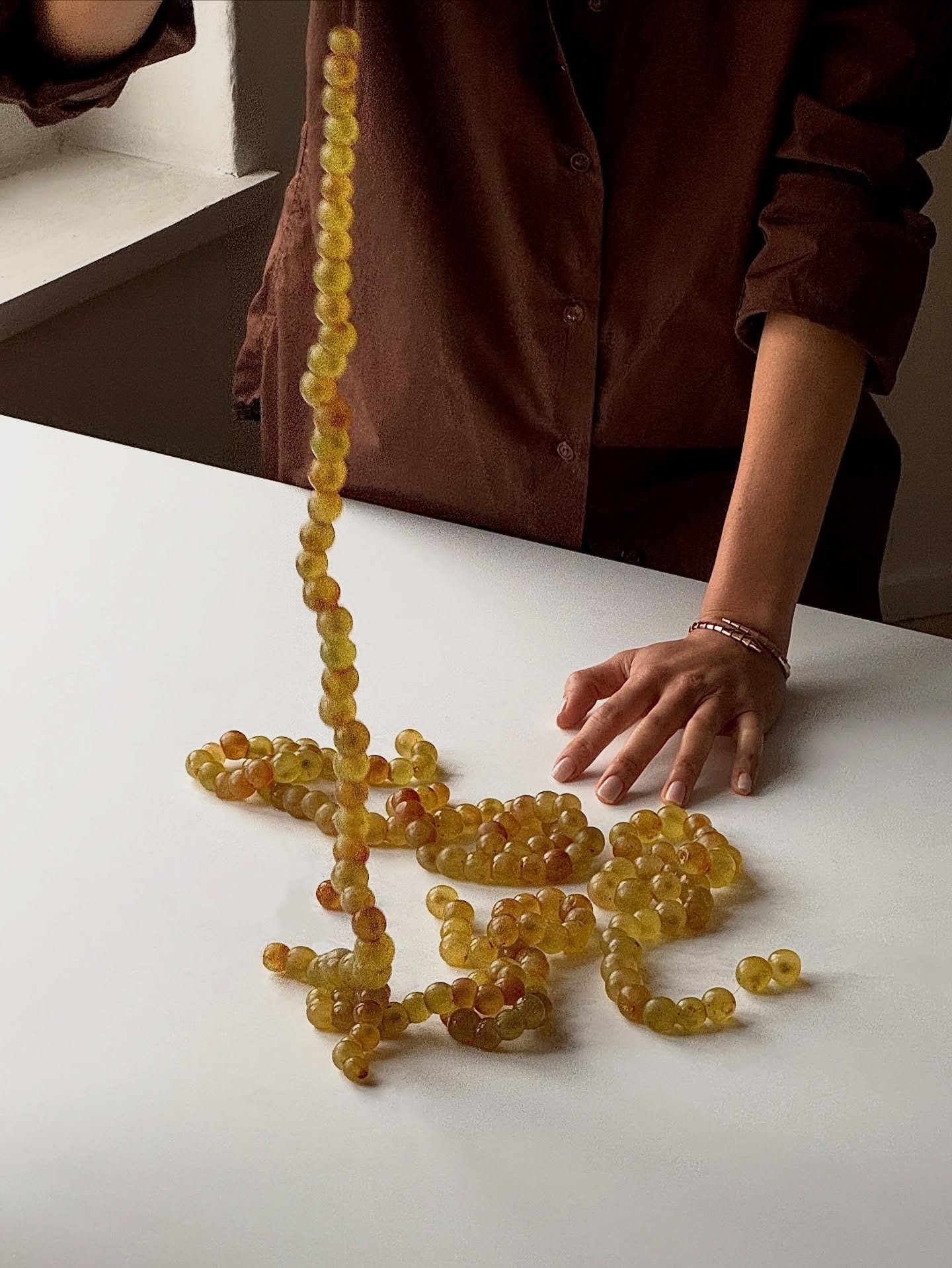
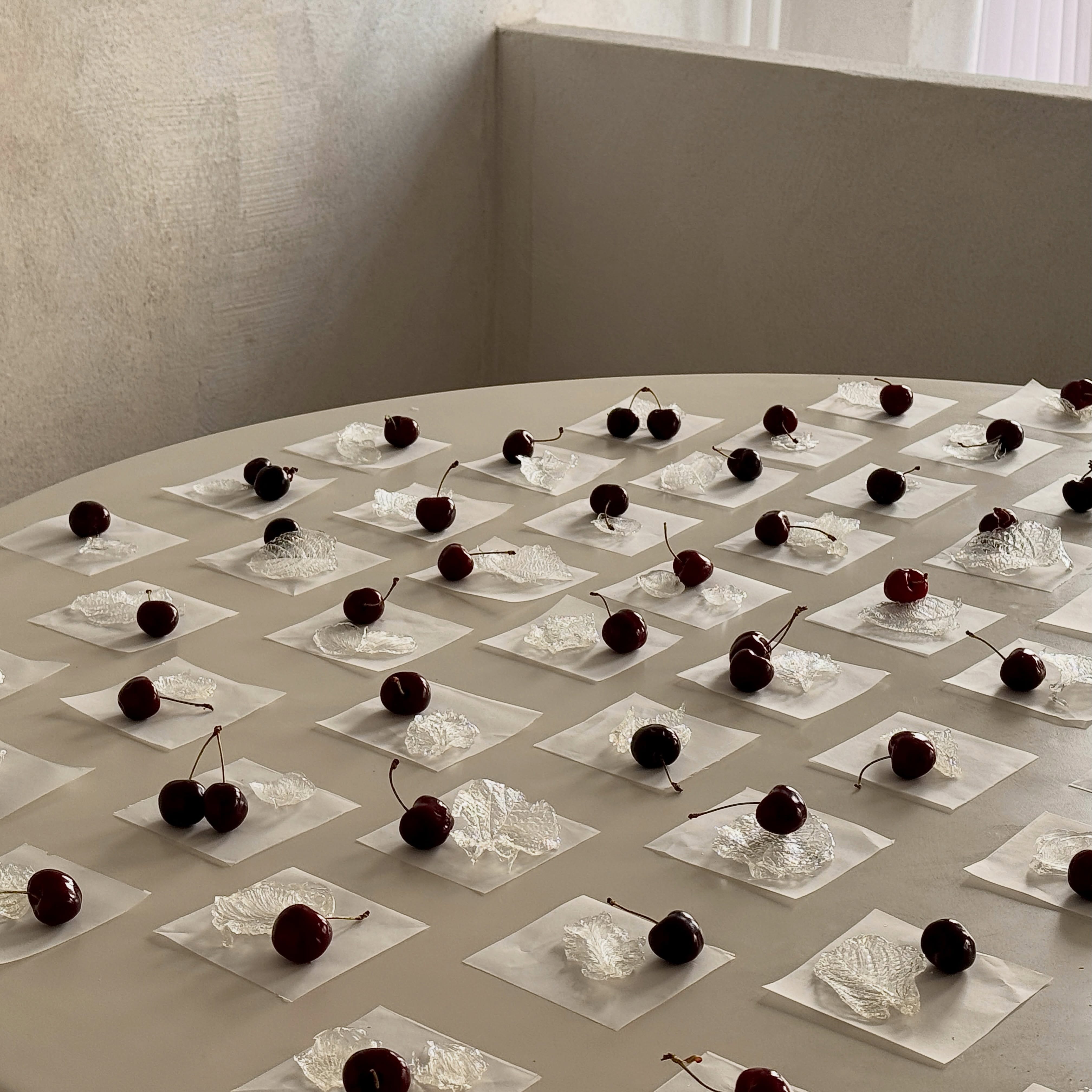
Sugar, right now. It’s granular as we know it, but with heat it behaves like glass and can be shaped into almost anything. It’s all about process - a delicate balance of precision, heat, temperature, time. Introduce air and it expands in a way that’s out of this world; it’s the height of intimacy and physical action with an edible material. It forces spontaneity, because you lose a degree of control, whether through heat or air. It’s exciting and it keeps you on edge - hot, unpredictable, always testing you.
When I work with it I wear white cotton gloves under two or three layers of plastic, and use a blowtorch at a precise heat. I don’t think I’ve explored it fully yet, I’m still getting to know it. That feels honest.
What’s your culinary red flag when you walk into a restaurant?
Having worked in restaurants, I know you’re thinking about so many things at once, not just the food, but lighting, temperature, service, anticipating what people want and how they feel. There’s a lot of empathy in restaurants, and I think about that with any event project: how someone’s going to feel, how they’re introduced, the choreography of the space. I’ve been to places where the food is amazing but nothing else lines up, and that’s always disappointing - it’s multifaceted, you can’t rely on the food alone.
At the restaurants I worked in, we’d sit in every chair and ask: is anyone looking at something weird, are they too close to this, how will they feel getting here? You have to put yourself in someone else’s position to curate a space that makes people feel good. That wholesomeness matters, especially in dining.
What’s the single most versatile ingredient in the world – and what’s its most boring execution?
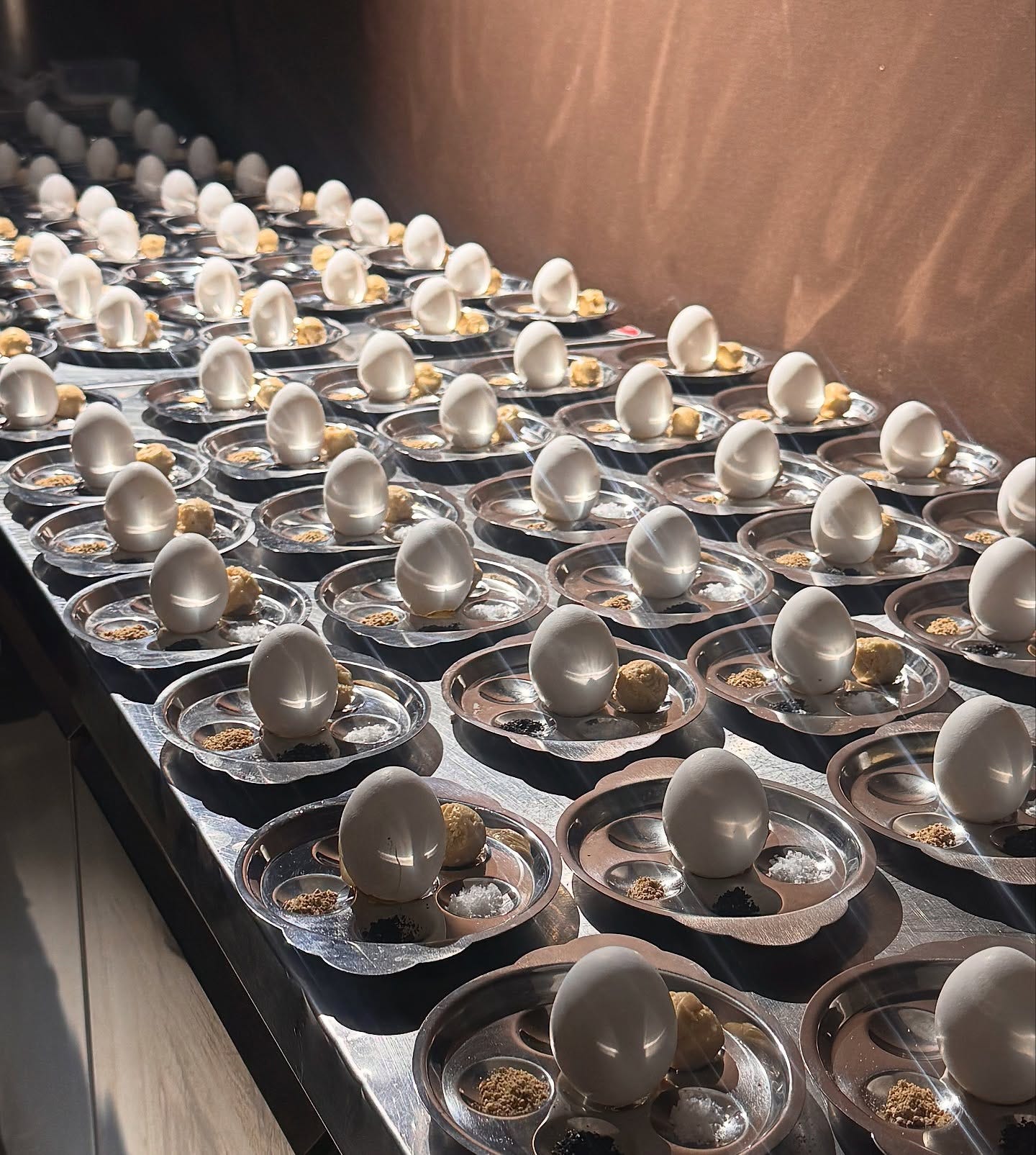
Salt. It preserves, flavors, changes form - the most useful ingredient there is. The most boring use of it is the wrong salt for the wrong job: there’s a salt for seasoning pasta or vegetables, a different one for finishing, another for dipping. People get that wrong constantly, or they buy bad salt with no real flavor - and salt has an enormous range of flavor to get right or wrong.
What’s a flavor combination you love but sounds like it shouldn’t work?
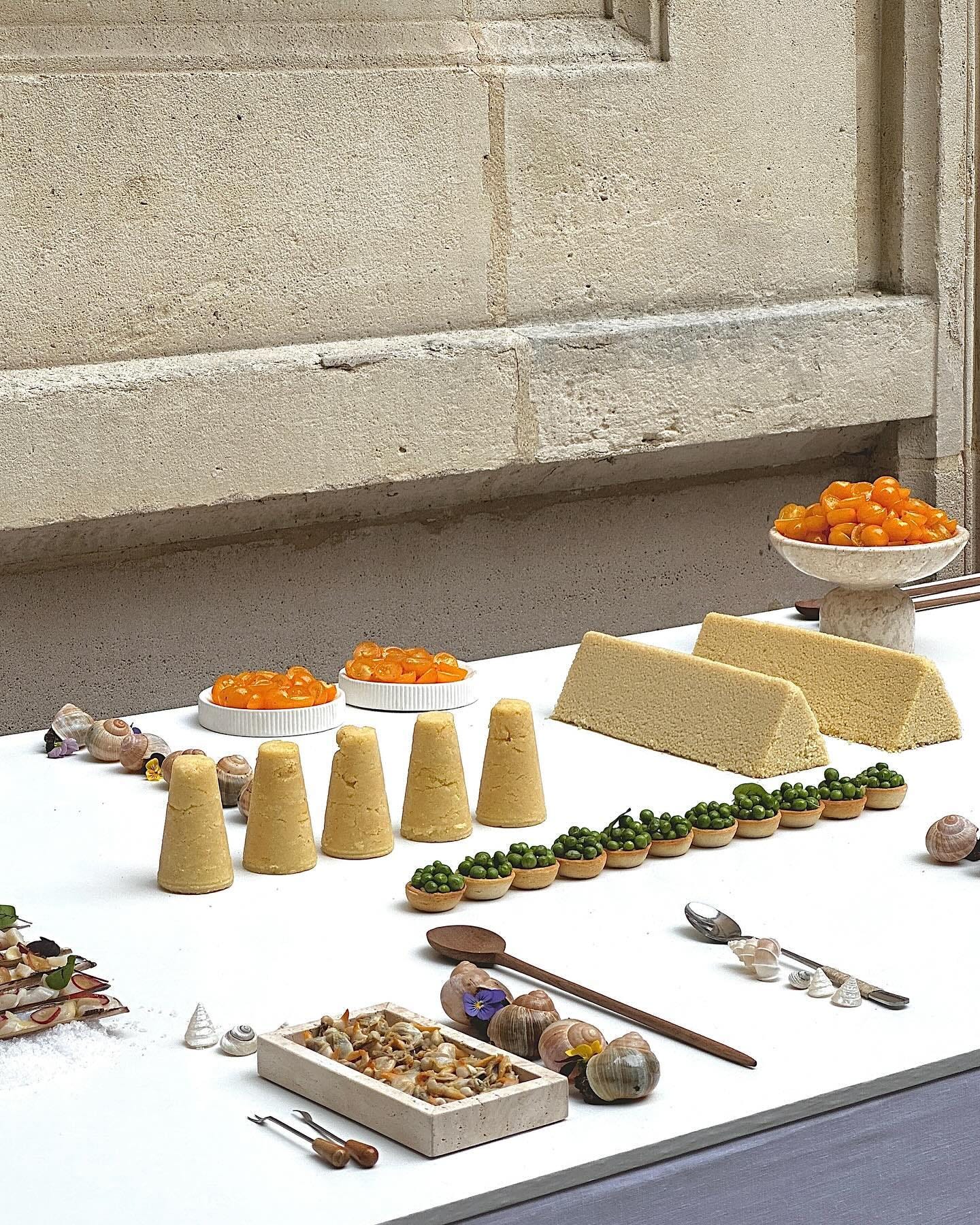
I’m Chinese and Korean, and that’s my comfort food - what my family has always cooked. Bringing that into more European ingredients, without it reading as “fusion” - I don’t love that word - the flavors just balance each other. Chinese cuisine in particular understands salty, bitter, sweet, sour, savory as one balance. Introducing something that doesn’t seem to belong to a cuisine can come out in really interesting ways.
If you had to strip your style down to three core flavors, what would they be?
Salty, sweet, and sour.
How does minimalism show up in food?
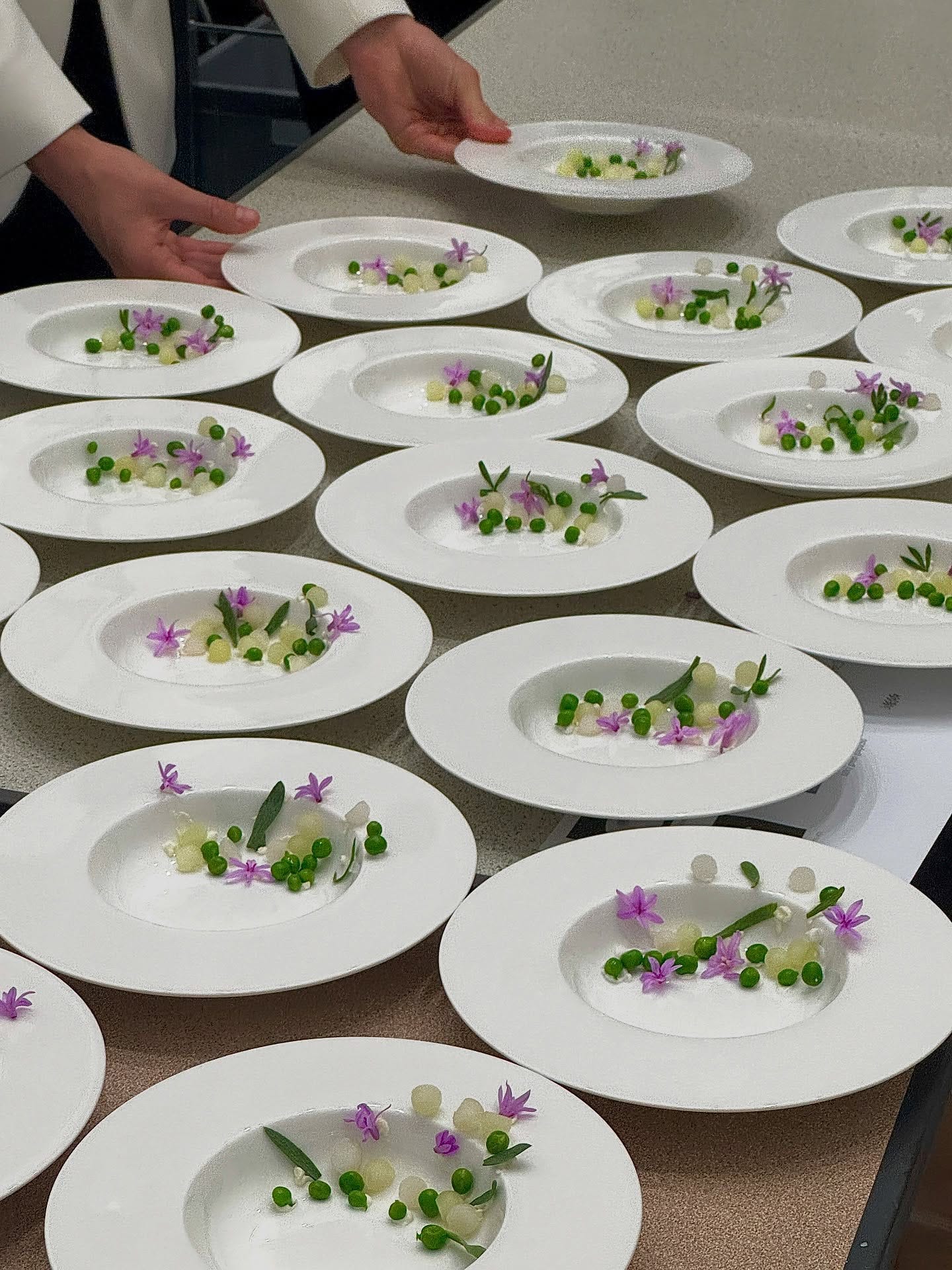
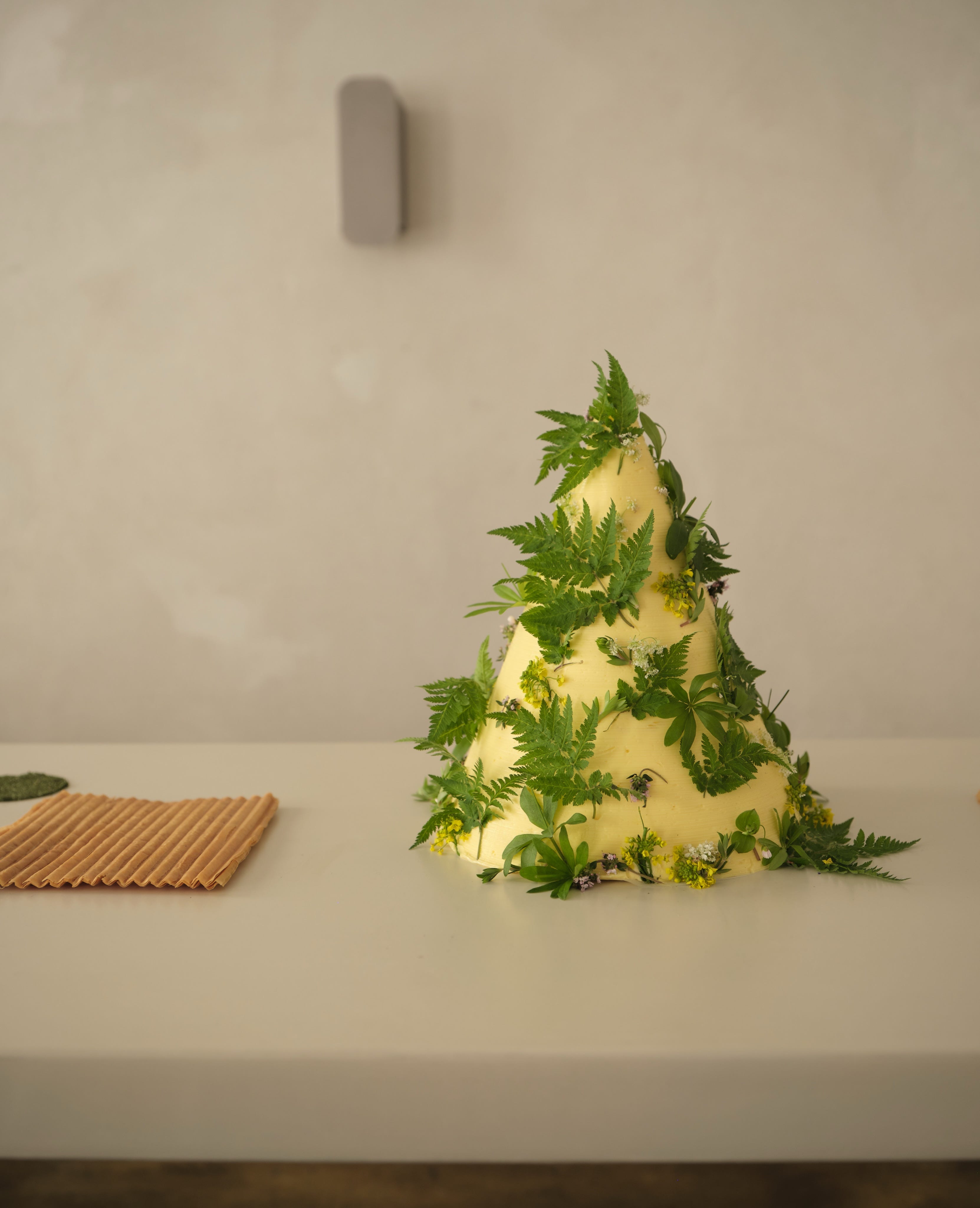
Negative space - in plating, on a table, wherever. People confuse overcrowding with generosity, like abundance has to be visible. I’d rather let something breathe, let it be flavorful without a lot of accompaniment, or let something so fresh and seasonal stand on its own. That restraint - letting ingredients speak for themselves - starts with using ingredients that are strong enough to do that.
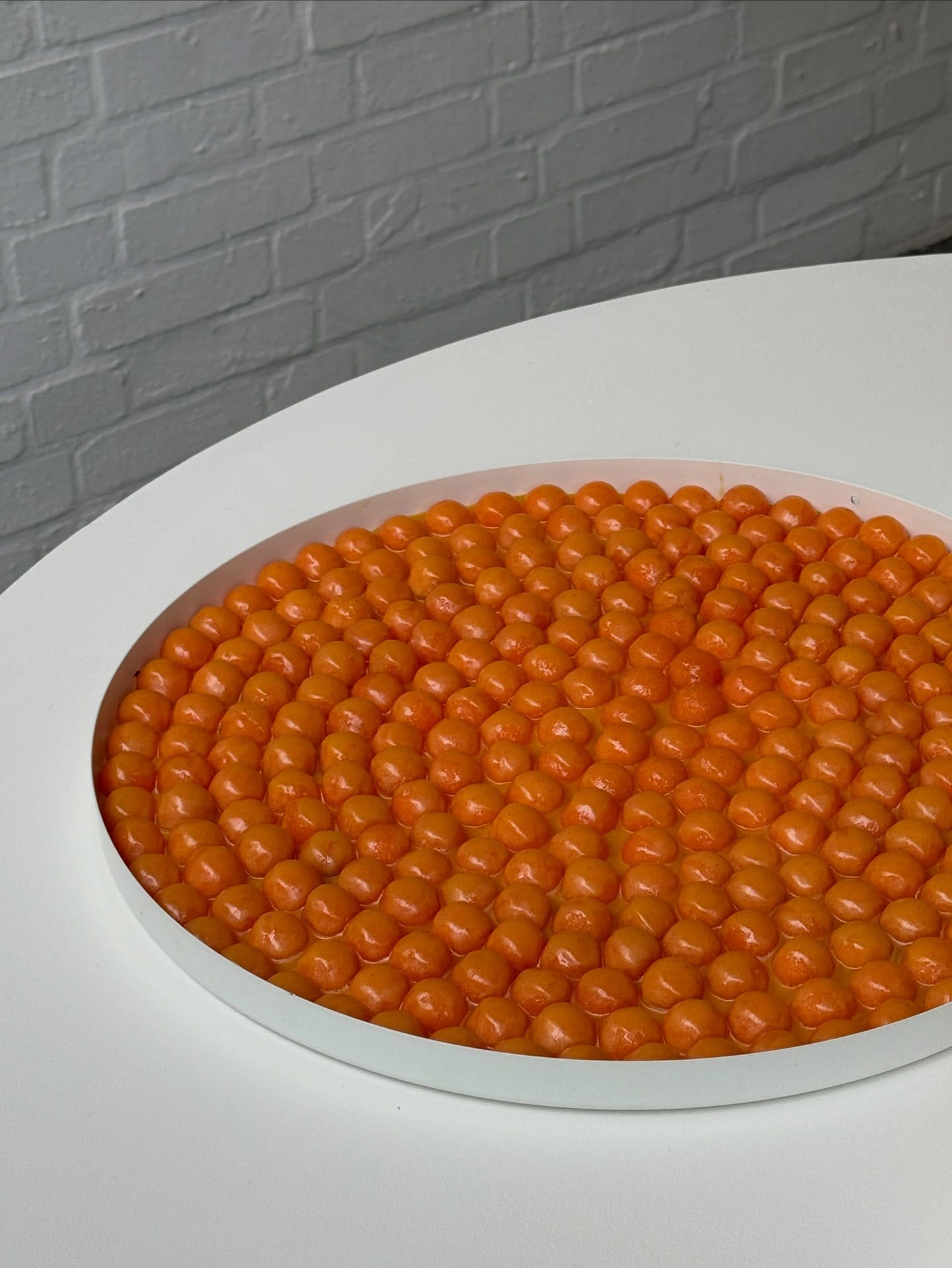
Walk us through how your process usually starts.
Food is chaotic, and beautifully so. It’s always either growing or dying, and in between it’s melting, dissolving, dehydrating, changing shape. My work is about finding a moment of stillness inside that, and thinking about how someone will experience something before the first taste or touch.
So deciding on a project means asking: how do we take this chaotic, natural thing and control it for a moment, while accepting that everything you make will eventually be destroyed? Food is the only medium where you have to ruin it to fully experience it. That has to be in your mind for any recipe or project, whatever comes out of it follows from there.
How do you know when something is finished?
Finding that fleeting moment of stillness, despite everything working against you - an ingredient out of season, too much moisture in the air, dough suffering in the heat. You have to stay open and instinctive, and know when the time is right, even if it means abandoning what you thought would work. I’ve learned the same thing doing event work: with a fixed number of hours, you leave room for the elements and just make sure what you’ve done stays intentional and still lands.
Imogen curated her favorite pieces on Basic.Space - sculptural vintage lighting, monochrome seating, and design objects that catch your eye without announcing themselves. Shop the collection now.
Watch the full Taste episode on Imogen Kwok on Youtube.
Thanks for reading Own The Future™